
Beyond Blame
Is suffering a punishment and health a reward? Jesus reframes the question entirely—revealing that every form, even the hardest, can become a vessel for the presence of truth.

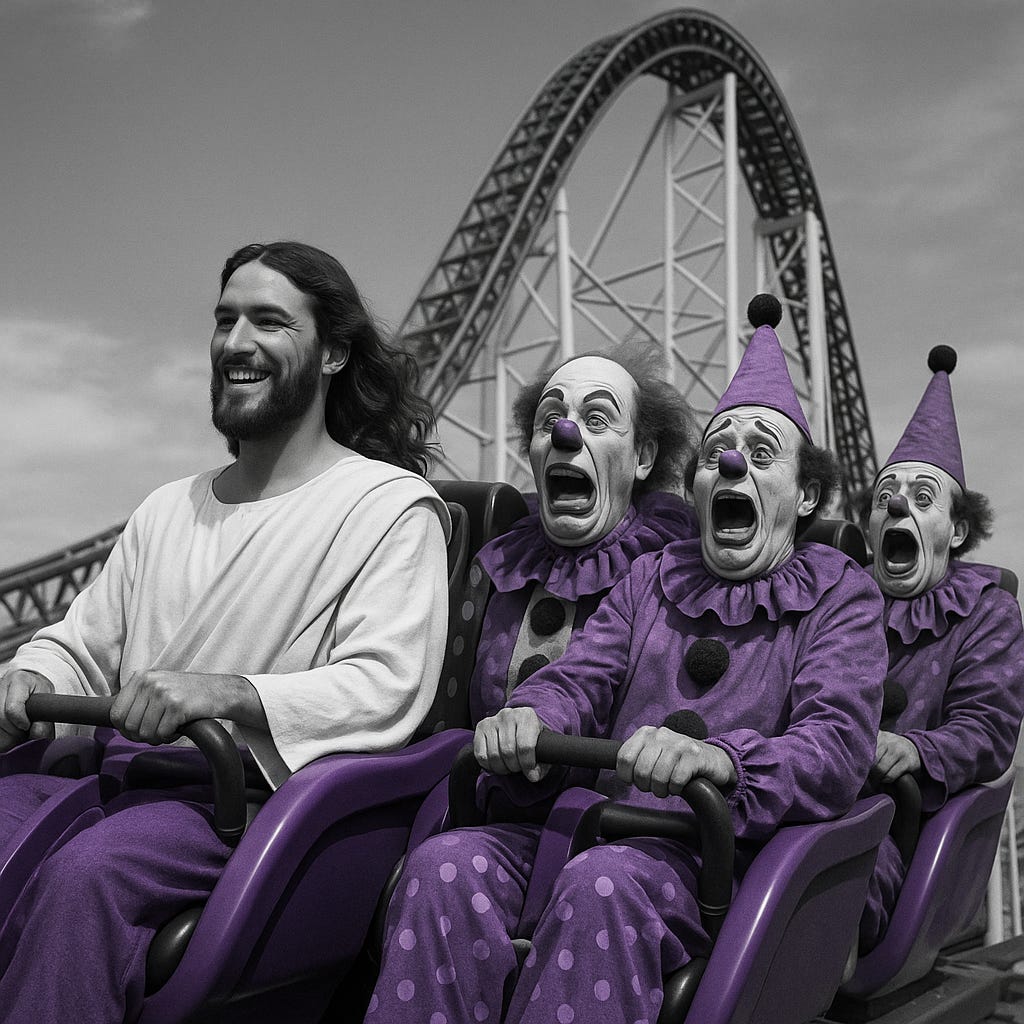
When the disciples asked Jesus, “Who sinned, this man or his parents, that he was born blind?”, they revealed a mindset still dominant today: suffering must be punishment; health must be a reward. To this day, we often believe that a child born with a disability is somehow a sign of divine displeasure—while a healthy child is seen as a blessing.
But Jesus' answer shattered this logic: “Neither this man nor his parents sinned, but that the works of God might be revealed in him.”
This was not a theological loophole. It was a redefinition of meaning itself. He severed the link between pain and guilt, between misfortune and moral failure. He pointed to something deeper: a truth that does not conform to the mental framework of good and bad, success and failure.
Beyond the Mind’s Judgments
The mind naturally wants to classify experience: acceptable or unacceptable, fortunate or unfortunate. It defines blessing as pleasure and curse as pain. But this binary is the very structure of unconsciousness. To remain within it is to remain blind.
Suffering, especially when it confronts the ego’s expectations, has the potential to dissolve the mental need to know why. It leads to the point where the mind can no longer explain, control, or justify. And in that collapse, something greater can be seen—not through thinking, but through surrender.
A child born with a disability is not a curse. It is a silent invitation to presence, to deeper seeing, to the collapse of conceptual conditions for love. It can become the purest expression of being, free from function, free from performance. The parent who walks this path, if willing to let go of understanding, can experience a transformation no logic could explain.
What About the “Blessed”?
And what about those who seem to be “blessed” with health and ease? It may look lighter, but it can also be deceiving. Without consciousness, ease becomes complacency. Health becomes pride. The gift of a smooth path is only a gift if one walks it with awareness. Without that, it may be a greater prison than pain ever was.
What we call blessing and what we call curse are both forms—shells awaiting consciousness. Only presence turns experience into revelation.
The Works of God Are Not Miracles
The “works of God” are not flashes of magic that fix the external. They are shifts in perception that reveal the eternal. They unfold not in the restoration of sight, but in the recognition that true vision was never of the eyes. They manifest not through the solving of form, but through the stillness that sees through form.
This is not about justifying pain. It’s about transcending the framework that sees life as a transaction of reward and punishment. It's about realizing that the formless expresses itself through every form—especially the ones that challenge the ego the most.
Every Experience Is Sacred
There is no greater or lesser experience in the eyes of truth. One may be harder for the mind, yes. But difficulty is not a measure of value—it is a gateway to surrender. And in surrender, the veil lifts.
We don’t need to explain suffering. We need to see it. Live it. Be with it—without adding meaning from the mind. For when we do, something deeper than understanding begins to emerge: the quiet, radiant unfolding of presence itself.
And that… is the true miracle.
If you enjoy my work and wish to support it, you are welcome to make a voluntary contribution to the following account: IBAN SK35 5600 0000 0024 4561 7002. This is a gift, entirely optional, and will help me continue sharing my work with you.
If suffering or misfortune does not exist, we have no real opportunity for compassion.
Wonderfully explained. If you throw a hundred seeds on the ground, not all will sprout and a few will flourish. This was not the result of sainthood or sin.